

How to Fix Running Toilet Problems at Home

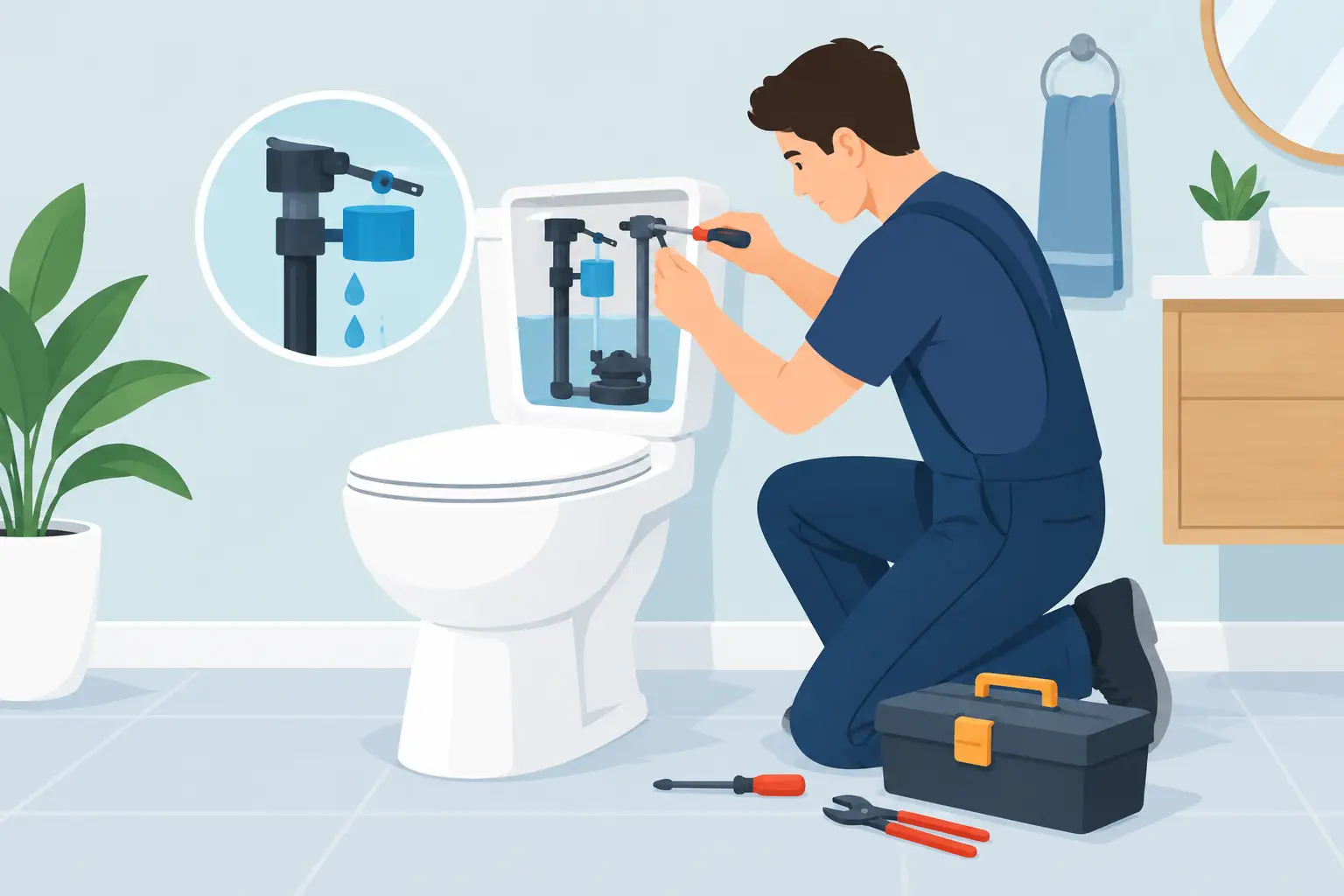
A toilet that refills every few minutes can waste hundreds of gallons of water before you notice a higher utility bill. When homeowners search for how to fix running toilet problems, the answer is usually inside the tank: a worn flapper, an incorrectly adjusted fill valve, or water flowing into the overflow tube. Most repairs are straightforward, but identifying the right cause first prevents unnecessary parts and repeat problems.
Before removing the tank lid, take a moment to listen. A toilet that runs continuously has a different cause than one that refills briefly every 10 to 30 minutes. That simple observation gives you a useful starting point.
Start by Finding Where the Water Is Going
Remove the tank lid carefully and set it on a towel or stable surface. Porcelain lids can crack easily. Then flush the toilet and watch the parts inside the tank as it refills.
The key components are the flapper at the bottom of the tank, the chain connected to the flush handle, the fill valve that controls incoming water, the float attached to or built into that valve, and the overflow tube near the center of the tank. Water should stop below the top of the overflow tube after the tank has filled.
If water is flowing into the overflow tube after the tank reaches its normal level, the fill valve or float setting is the likely issue. If the water level is below the overflow tube but the toilet periodically refills, water is probably leaking slowly from the tank into the bowl through the flapper.
Use a Dye Test for a Slow Flapper Leak
A flapper leak is one of the most common reasons for a running toilet. The rubber flapper is meant to seal the opening at the bottom of the tank after each flush. Over time, rubber can become warped, brittle, coated with mineral buildup, or simply unable to make a watertight seal.
To confirm the problem, add several drops of food coloring to the tank water. Do not flush. Wait 15 to 20 minutes, then look in the bowl. If colored water appears in the bowl, the flapper is leaking.
First, check whether the flapper is sitting flat over the drain opening. Sometimes a chain is too short, gets caught under the flapper, or has too much slack and interferes with a complete flush. The chain should have a small amount of slack when the flapper is closed.
If the chain is properly adjusted, remove the flapper and inspect it. A replacement is inexpensive and should match your toilet’s flush valve opening. Take the old flapper with you when buying a new one, or note the toilet make and model. Clean mineral residue from the rim of the flush valve before installing the replacement. Even a new flapper can leak if it is sitting on a rough or dirty surface.
How to Fix a Running Toilet Caused by the Fill Valve
If water continues flowing after the tank is full, look at the overflow tube. Water entering that tube means the tank level is too high. This does not necessarily mean the toilet is overflowing onto the floor, but it does mean clean water is being sent directly into the bowl and down the drain.
Many newer fill valves have an adjustment screw or sliding clip that changes the water level. Lower the setting gradually until the water stops about 1 inch below the top of the overflow tube. Flush once more and confirm that the tank refills to the proper level.
Older toilets may use a float ball on a metal arm. Carefully bend the arm downward slightly to lower the shutoff level. Make small adjustments only. Excessive force can damage an older valve assembly.
A fill valve that will not shut off, makes a loud hissing sound, or refills inconsistently may be worn out. Replacing it is often more reliable than trying to clean or adjust a failing valve. Universal fill valves work with many toilets, but always follow the manufacturer’s installation instructions and set the refill tube correctly.
The small refill tube should be clipped above the overflow tube, not pushed down inside it. If it is inserted too far into the tube, it can create a siphon effect that keeps drawing water from the tank.
Check the Flush Handle and Chain
A toilet can also run because the flapper never fully closes after flushing. This is often caused by a sticking flush handle or a poorly adjusted chain.
Press and release the flush handle several times. It should return easily to its resting position. If the handle stays down or feels loose, the lift arm inside the tank may be corroded, disconnected, or out of position. Handle replacement kits are usually simple, but keep in mind that many toilet handle nuts have reverse threads. Turn the nut clockwise to loosen it.
Next, inspect the chain. It should lift the flapper fully during a flush but allow it to settle completely afterward. A chain that is too tight holds the flapper partially open. A chain that is too long can snag beneath the flapper or tangle around another tank component. Reconnect it to a different hole on the flush lever if needed.
When the Flush Valve Is the Real Problem
If you replace the flapper and the toilet still leaks into the bowl, the flush valve seat may be damaged. The flush valve is the plastic fitting that the flapper seals against. Cracks, warping, rough mineral deposits, or an uneven surface can prevent a reliable seal.
Minor buildup can sometimes be cleaned carefully with a non-abrasive pad. However, a cracked or badly worn flush valve generally needs replacement. This repair may require removing the tank from the bowl, replacing tank-to-bowl bolts and seals, and reinstalling the tank level and secure. It is a reasonable job for an experienced homeowner, but it is also where a small leak or overtightened porcelain fitting can turn into a larger repair.
If the toilet is older, compare the repair cost with the overall condition of the fixture. A new fill valve and flapper make sense for a toilet in good condition. If the toilet has recurring leaks, loose mounting, cracks, or frequent clogs, replacement may be the better long-term decision.
Turn Off the Water if the Toilet Will Not Stop
If water is running rapidly and adjustments are not working, close the shutoff valve behind or beside the toilet. Turn it clockwise until the water stops, then flush to empty most of the tank. This gives you time to inspect the parts without wasting water.
Do not force a seized shutoff valve. Older valves can break or begin leaking when disturbed. If the valve is stiff, corroded, or drips after you touch it, leave it alone and arrange for a plumbing repair. A working shutoff valve is one of the most useful protections in any home, especially before travel or during an unexpected plumbing issue.
When It Makes Sense to Call a Plumber
A basic flapper or fill valve replacement is often a manageable weekend repair. Call for professional help when the running toilet is paired with water around the base, a cracked tank or bowl, a broken shutoff valve, repeated fill valve failures, or a tank that must be removed for repair. These symptoms can point to more than a simple internal tank issue.
Homes in the Seattle area can also have varying water conditions and aging plumbing fixtures that complicate what initially looks like a minor toilet repair. A proper diagnosis can identify whether the problem is limited to the toilet’s internal parts or involves the supply line, shutoff valve, drain connection, or fixture installation.
Sky Lux provides practical plumbing repairs with clear communication and attention to the details that prevent a quick fix from becoming another service call. If you are not comfortable working around older valves or porcelain tank components, having the toilet inspected can save water, time, and avoidable damage.
A running toilet rarely fixes itself, but it usually gives clear clues about what is wrong. Start with the water level and flapper test, make one adjustment at a time, and do not ignore a toilet that keeps refilling after the repair. A quiet tank is a small sign that your plumbing is doing exactly what it should.