

Sewer Repair Signs Seattle Homeowners Should Know

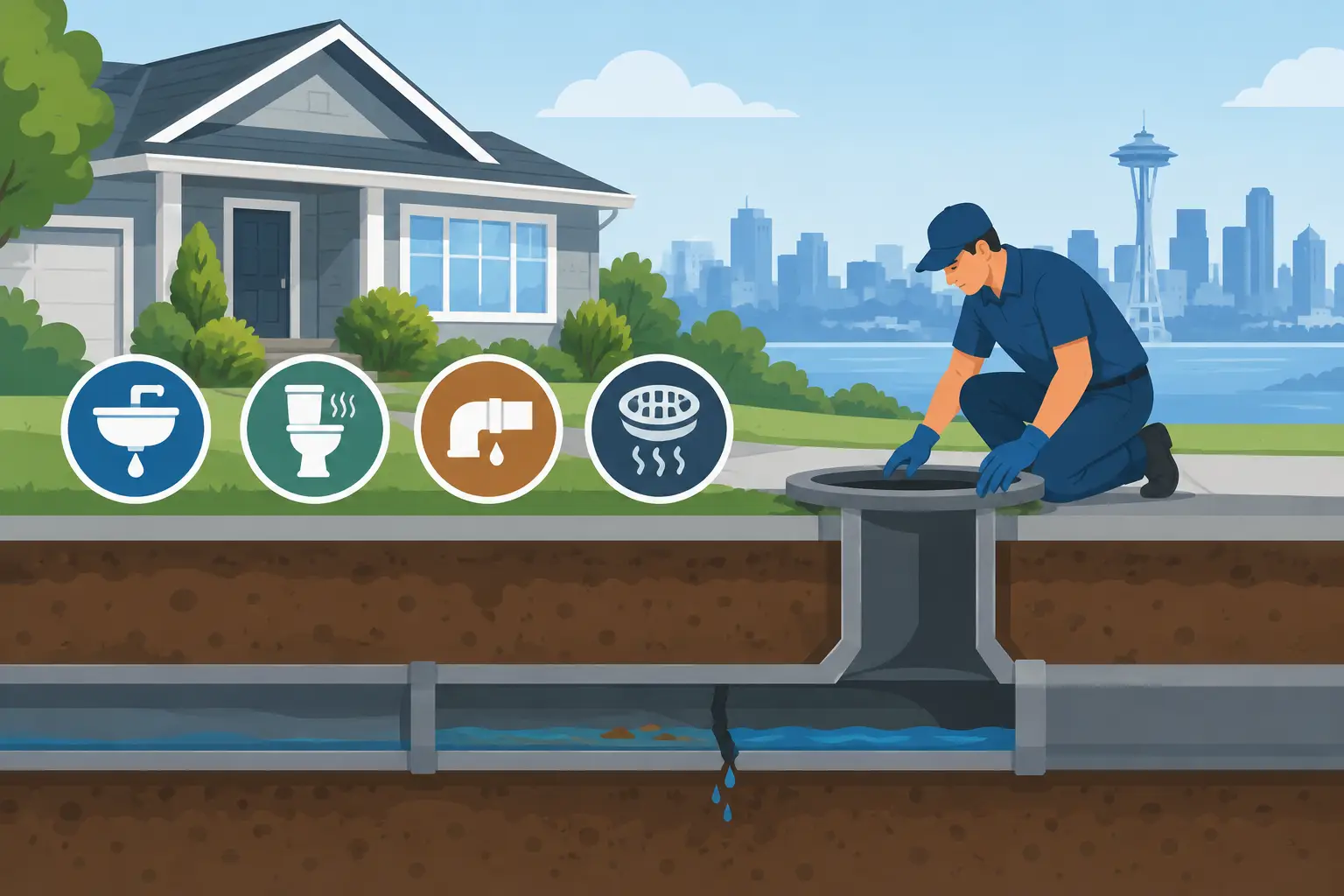
A slow drain is easy to ignore. Several slow drains, a toilet that gurgles when the washer empties, or water appearing near a floor drain are different. Those are common signs that sewer repair may be needed, and waiting can turn a manageable pipe problem into a messy disruption inside or outside the home.
A sewer line carries wastewater away from your property. When it is blocked, cracked, misaligned, or invaded by roots, the symptoms can affect more than one fixture at a time. The right next step is not guessing or repeatedly pouring chemicals down a drain. It is finding the source of the problem and choosing a repair that fits the condition of the line, the home, and the property.
When Sewer Repair Is More Than a Clogged Drain
A single sink draining slowly may be a local clog in that fixture’s drain. A sewer line issue usually creates broader symptoms because multiple drains connect to the same main line. If the kitchen sink, shower, toilet, or laundry drain begin acting up together, the problem may be farther downstream.
Pay attention to patterns. A toilet that bubbles when a nearby sink drains can indicate restricted flow in the main sewer. Water backing up into a bathtub or shower when the toilet is flushed is another warning sign. Lower-level fixtures often show the first symptoms because they sit closest to the sewer line.
Bad odors also deserve attention. Sewer gas smells inside the home, near a cleanout, or around the yard can point to a damaged pipe, failed seal, or blockage. Outdoors, unusually green patches, soggy soil without a clear reason, or a sunken area along the sewer route may signal a leak below ground.
None of these signs automatically means the entire line needs replacement. Tree roots, grease buildup, a collapsed section, an offset joint, or a damaged connection can produce similar symptoms. A professional inspection separates a temporary obstruction from a pipe condition that requires lasting repair.
Why Sewer Lines Fail in Seattle-Area Homes
Seattle-area properties range from older homes with aging underground lines to newer homes affected by settlement, heavy rain, and nearby landscaping. The material and age of the pipe matter. Older sewer systems may use clay, cast iron, Orangeburg, or other materials that can crack, corrode, deform, or separate over time.
Tree roots are one of the most common causes of recurring trouble. Roots naturally seek moisture and can enter through small openings at pipe joints or cracks. Once inside, they grow and catch debris. Clearing roots may restore drainage, but it does not permanently fix a pipe that continues to let roots in.
Ground movement can also shift sections of pipe. A joint that no longer lines up properly can snag paper and waste, creating repeat blockages. In some cases, heavy vehicles, construction activity, or settling soil contribute to a crushed or bellied line. A belly is a low area where wastewater and solids collect instead of flowing freely.
What goes down the drain matters, too. Grease, wipes labeled as flushable, hygiene products, and excessive paper can build up in a sewer line. Even a healthy pipe can clog when inappropriate materials are introduced. But if the same backup returns after clearing, the line should be evaluated for an underlying defect.
The Best First Step: Inspect Before Recommending Repair
Reliable sewer repair begins with diagnosis. A drain machine can remove many blockages, but it cannot show whether the pipe is cracked, root-filled, or collapsed. For recurring backups or signs of a main-line issue, a camera inspection provides a clear view inside the sewer line.
During an inspection, a technician sends a small camera through the pipe to locate the obstruction and identify the condition of the line. The footage can reveal root intrusion, buildup, standing water, broken sections, separated joints, or offsets. It can also help determine the location and depth of a problem before excavation is considered.
This step protects homeowners from paying for more work than necessary. If the line is structurally sound and simply blocked, clearing it may be the appropriate solution. If the camera shows a damaged section, you can discuss targeted repair rather than repeating temporary drain cleaning every few months.
A good diagnosis should include a straightforward explanation of what was found, where it is located, and what options make sense. Ask whether the issue is limited to one area, whether cleaning is likely to hold, and what signs would indicate that the pipe is getting worse.
Sewer Repair Options Depend on the Pipe Condition
There is no single best sewer repair for every home. The practical choice depends on pipe material, damage location, access, slope, landscaping, and local permitting requirements. A clear estimate should explain the work being recommended and why it is appropriate.
Clearing and Root Removal
When the pipe itself remains in usable condition, professional cleaning may restore normal flow. Mechanical cable equipment can cut through roots and break up many blockages. Hydro jetting may be appropriate for certain grease or buildup conditions, though the pipe needs to be assessed first. High-pressure cleaning is not the right choice for every deteriorated or damaged line.
Root removal can provide relief, but it is often maintenance when roots are entering through compromised joints. If roots return quickly, repairing or replacing the affected section may save frustration and repeated service calls.
Spot Repair
A spot repair replaces a limited damaged section of sewer pipe. This option is often sensible when camera inspection shows one crack, collapse, offset joint, or root-damaged area while the remainder of the line is in good shape.
Access is the main trade-off. Traditional excavation may require digging in a yard, driveway, walkway, or landscaped area to reach the damaged pipe. It can be disruptive, but it allows the contractor to remove failed material and confirm proper slope and connections. For a localized issue, that can be more cost-effective than replacing an entire line.
Trenchless Repair or Lining
Some sewer lines can be repaired with trenchless methods, depending on the damage and layout. Pipe lining creates a new interior surface inside an existing pipe, which can reduce digging in suitable situations. Other trenchless approaches may replace a line with limited excavation points.
These methods can help preserve landscaping or hardscape, but they are not automatic upgrades. A severely collapsed pipe, major belly, incorrect slope, or line with access limitations may not be a candidate. The best option is the one that solves the actual problem without creating new restrictions or leaving damaged sections in place.
Full Sewer Line Replacement
Full replacement is usually considered when a line has widespread deterioration, repeated breaks, extensive root intrusion, poor slope, or multiple repairs over time. It is a larger project, but it can provide a durable reset for a failing system.
Before approving replacement, homeowners should understand the pipe route, proposed material, restoration needs, permit requirements, and whether the work includes connections at both ends. If the line crosses a driveway or mature landscaping, discuss how those areas will be protected and restored. Clear planning helps prevent surprises once work begins.
What to Do While You Wait for Service
If wastewater is backing up inside the home, stop using water as much as possible. Do not run the dishwasher, washing machine, or additional showers, since every gallon can add to the backup. Keep children and pets away from contaminated water, and avoid attempting to clean a severe sewage backup without proper protection.
Do not rely on chemical drain cleaners for a suspected sewer problem. They rarely solve main-line blockages and can damage some plumbing materials or create hazards for the person servicing the line. If you know where your sewer cleanout is located, make a note of it for the technician, but do not force it open if it appears pressurized or damaged.
For non-emergency symptoms, write down what you notice. Which fixtures are affected? Does the problem happen only when the laundry drains or when a toilet is flushed? Has it happened before? These details help speed up diagnosis and keep the conversation focused on the right repair.
Choosing a Sewer Repair Contractor
Sewer work affects the safety, comfort, and value of your property, so choose a contractor based on diagnosis and accountability rather than the fastest promise alone. Look for a licensed and insured professional who can explain the findings in plain language, provide a written scope, and discuss whether a repair is temporary or intended as a long-term solution.
It also helps to work with a team that respects your time and property. Homeowners should not have to coordinate several contractors just to address a drain issue, restore an affected area, and move forward with other needed plumbing work. Sky Lux provides responsive plumbing service with careful diagnosis, clear communication, and repair recommendations built around the condition of your home.
A sewer concern rarely improves by being ignored. If you are seeing recurring backups, gurgling fixtures, or unexplained wet areas outside, arranging an inspection early gives you more options and a better chance to repair the line before a small warning becomes an urgent cleanup.