

Top Signs of Sewer Backup in Seattle Homes

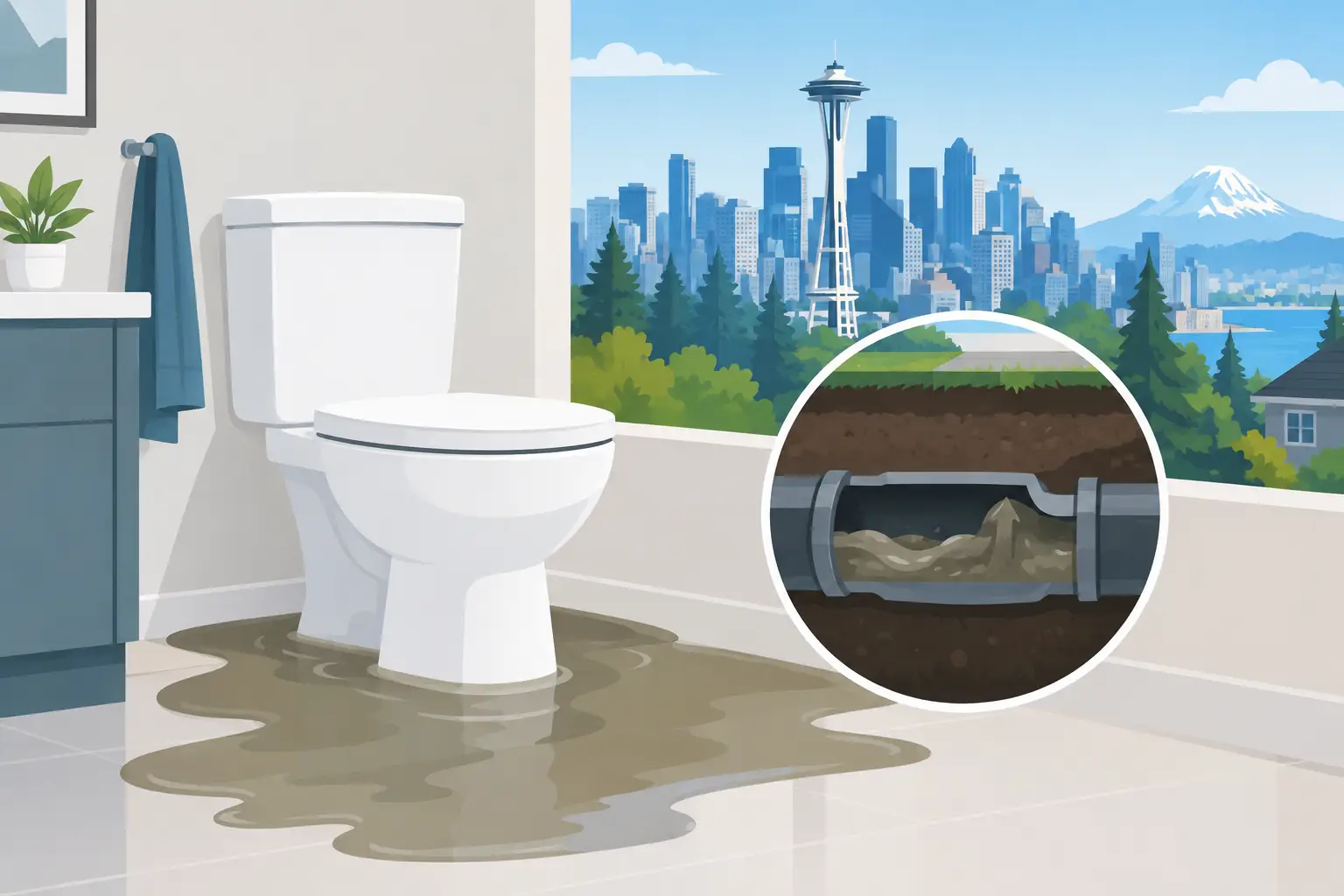
A sewer backup rarely begins with a dramatic flood. More often, it starts with one slow basement drain, an unfamiliar gurgling sound, or a toilet that acts strangely after the washing machine runs. Knowing the top signs of sewer backup gives Seattle homeowners time to stop using water, protect their property, and call for the right repair before a small warning becomes contaminated water inside the home.
A backup is different from an ordinary clog. A clog may affect one sink, shower, or toilet. A sewer line problem can affect several fixtures at once because wastewater has nowhere to go. That distinction matters when deciding whether to try a plunger or arrange professional diagnosis.
Top Signs of Sewer Backup You Should Not Ignore
Multiple drains are slow at the same time
One slow bathroom sink may be caused by hair or soap buildup near that fixture. But if the kitchen sink, bathtub, laundry drain, and toilets all drain slowly, the restriction may be farther down the main sewer line.
Pay attention to timing. If drains become sluggish when someone runs the dishwasher, does laundry, or takes a shower, wastewater may be meeting an obstruction in the shared line. Water uses the easiest available path, so a partial blockage can reveal itself at the lowest drain in the house first.
Gurgling sounds come from toilets or drains
A toilet should flush and refill quietly. Bubbling or gurgling from the bowl, shower drain, or nearby sink can mean trapped air is being pushed back through the plumbing system. This often happens when wastewater cannot move freely through the sewer line.
An occasional sound does not always mean a backup is underway. However, repeated gurgling, especially when another fixture is running, deserves attention. It can be an early opportunity to clear a developing blockage before sewage reaches the floor.
Water backs up into a tub, shower, or floor drain
This is one of the clearest signs of a main line issue. If flushing a toilet causes water to rise in the bathtub, or running the washing machine sends water into a basement floor drain, stop using water throughout the house.
Lower-level fixtures are usually the first places where backed-up wastewater appears. The water may look cloudy, dark, or contain debris. Do not treat this as ordinary drain water. It may contain sewage, bacteria, and contaminants that require careful cleanup.
Toilets flush poorly, overflow, or change water level
A toilet that needs repeated flushing, drains slowly, or overflows without an obvious bowl-level clog may be reacting to a sewer line restriction. You may also notice the water level in the bowl rising and falling on its own after another appliance drains.
A plunger can help if the obstruction is in that toilet. It will not solve roots, damaged pipe, grease buildup, or a blockage in the main sewer line. Repeated flushing can make the situation worse by adding more water to a system that is already struggling to drain.
Sewage odors appear indoors or near the yard
A persistent sewer smell should never be ignored. It can signal a blocked line, a damaged pipe, a dry drain trap, or a venting problem. The location of the odor helps narrow down the cause, but a strong smell near drains, a basement, crawlspace, or outside cleanout is a reason to investigate promptly.
In Seattle’s wet months, rain can make outdoor odors more noticeable. Still, rain alone should not create a sewage smell inside your home. If the odor remains after airing out the area or returns whenever water is used, schedule an inspection.
A cleanout is leaking or standing water appears outside
Many homes have a sewer cleanout, typically a capped pipe located in a yard, basement, garage, or crawlspace. Water or sewage around that cap may mean pressure is building behind a blockage. A wet, unusually green, or sunken area in the yard can also point to a damaged underground sewer line.
Avoid opening a cleanout yourself when you suspect a backup. If the line is full, removing the cap can release wastewater quickly. A plumbing professional can assess the condition safely and identify whether the issue is a blockage, root intrusion, collapsed section, or connection problem.
Why Sewer Backups Happen in Seattle-Area Homes
The cause depends on the home’s age, pipe material, maintenance history, and connection to the public sewer system. Older properties may have aging clay, cast iron, or Orangeburg pipes that crack, shift, corrode, or allow roots inside. Tree roots naturally seek moisture and can enter even a small opening, then expand until they restrict flow.
Grease is another common cause. Hot cooking grease may look liquid when it goes down the drain, but it cools and sticks to pipe walls. Over time, grease combines with food particles, soap residue, and wipes to create a stubborn blockage. Products labeled “flushable” can still cause problems because they do not break down like toilet paper.
Heavy rain can also expose an existing weakness. Depending on the property and local sewer configuration, excess groundwater or stormwater can increase pressure around older lines. Rain is not always the root cause, but it can be the event that turns a partially blocked or damaged pipe into an active backup.
What to Do When You Notice a Possible Backup
First, stop adding water to the plumbing system. Do not flush toilets, run the dishwasher, start a load of laundry, or take a shower. Even a small amount of additional water can force wastewater out through a low drain.
Keep children and pets away from affected areas. Wear gloves and avoid direct contact with standing water, especially if it has a sewage odor or visible waste. Do not use a standard household vacuum to remove contaminated water, and do not attempt to disinfect a large sewage spill before the source has been stopped.
If water is approaching electrical outlets, appliances, or a finished living area, turn off power to the affected area only if it is safe to do so. Otherwise, stay clear and contact an electrician or emergency service as needed. Take a few photos for your records once the area is safe, then contact a qualified plumbing professional for diagnosis.
A camera inspection can be especially useful because it shows what is actually inside the line. That prevents guesswork and helps determine whether clearing the blockage is enough or whether a damaged section needs repair. The right solution depends on the condition of the pipe, not just the immediate symptom.
Do Not Wait for a Full Backup
It can be tempting to wait after one slow drain or one noisy toilet, particularly if the problem seems to disappear. But sewer issues often return at the least convenient time, such as during a busy morning, a family gathering, or a period of heavy rain. Early service is usually cleaner, less disruptive, and easier to manage than emergency cleanup after wastewater reaches finished flooring.
For Seattle-area homeowners, Sky Lux provides practical plumbing diagnosis with clear communication about what the problem is, what repair is recommended, and what to expect next. If several fixtures are acting up or water is coming back through a drain, treat it as a warning worth acting on. A prompt inspection can protect your home, your time, and the people who live there.